 EN
EN


When educators and parents seek effective tools for early learning and knowledge retention, cognitive cards consistently emerge as one of the most reliable formats. These structured, visually rich learning aids are not simply decorative flashcards — they are purposefully engineered systems that interact with how the human brain processes, stores, and later retrieves information. Understanding why they work so well requires a closer look at the relationship between content structure, image design, and the fundamental mechanics of memory itself.
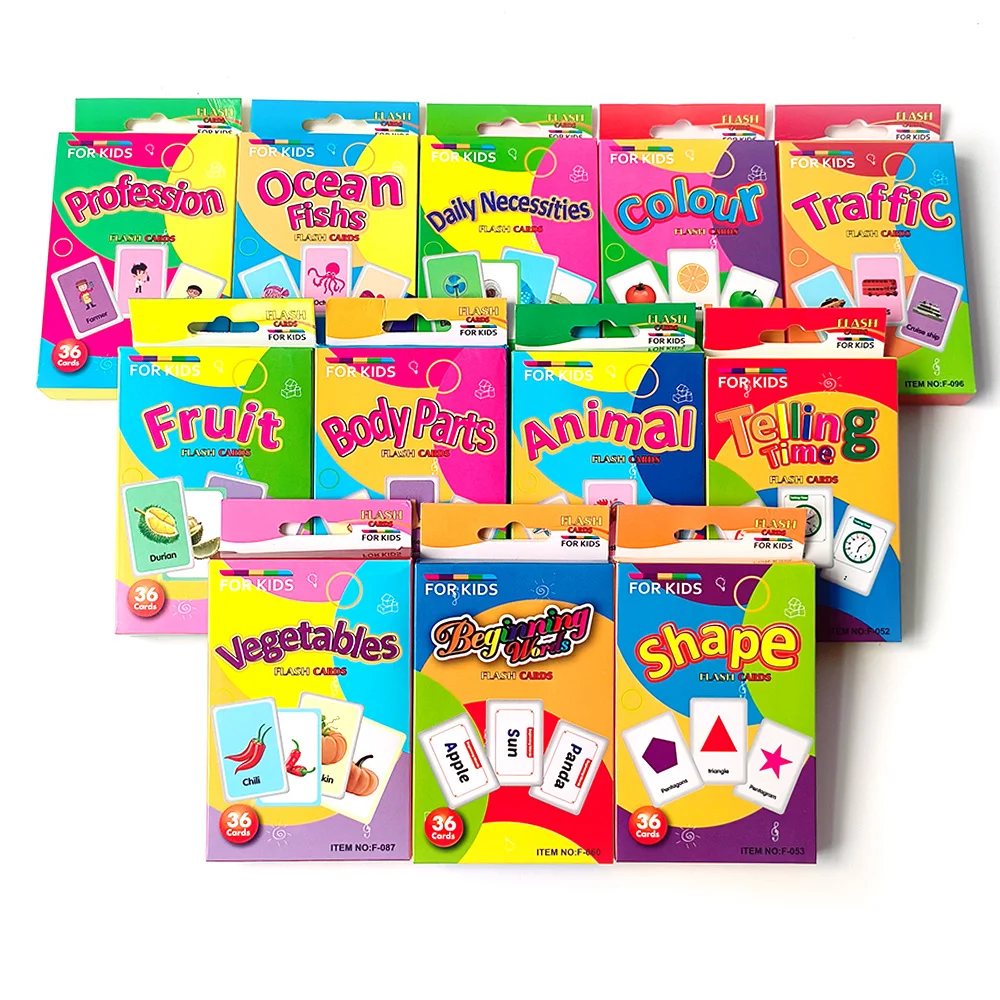
The science behind cognitive cards draws from decades of research in cognitive psychology, educational neuroscience, and instructional design. Memory encoding — the process of converting incoming information into a storable format — and memory retrieval — the act of accessing stored knowledge — are both deeply influenced by how information is presented. cognitive cards that are thoughtfully structured and visually designed can significantly accelerate both processes, making them invaluable in classrooms, therapy environments, and home-based learning programs.
The Role of Content Structure in Memory Encoding
Chunking and Cognitive Load Management
One of the most critical structural principles built into effective cognitive cards is chunking — the practice of breaking information into meaningful, digestible units. The human brain has a limited working memory capacity, and presenting too much information at once overwhelms that capacity, preventing effective encoding. By limiting each card to a single concept, word, number, or relationship, cognitive cards ensure that working memory is not overloaded.
This design philosophy aligns directly with Cognitive Load Theory, which holds that learning is most efficient when the material presented does not exceed the learner's processing bandwidth. When a child encounters a cognitive card that features one animal with its name and one clear illustration, the brain can form a clean, well-defined memory trace. That trace becomes the foundation for later retrieval. Structured simplicity is not a compromise — it is a deliberate mechanism for deeper encoding.
In practice, this means the text on cognitive cards must be concise, hierarchically organized, and semantically clear. Designers and educators who commission custom cognitive cards for specific learning programs routinely prioritize this principle because it produces measurable improvements in learner recall over time.
Repetition Patterns and Spaced Learning Integration
The structural design of cognitive cards also supports spaced repetition — a learning technique proven to dramatically improve long-term memory retention. When content is organized into discrete units on individual cards, it becomes easy to implement spaced practice cycles where specific cards are reviewed at increasing intervals over time. This scheduling leverages the brain's spacing effect, which shows that memory consolidation is stronger when review sessions are distributed rather than massed.
Well-designed cognitive cards facilitate this process because their self-contained format makes them inherently sortable and categorizable. Learners and educators can sort cards by difficulty, familiarity, or topic, then prioritize review accordingly. Each time a cognitive card is revisited, the neural pathway associated with that piece of information is strengthened. The structural discreteness of each card is not incidental — it is what makes the spaced repetition method operationally feasible.
For manufacturers and developers of educational tools, this insight has important implications. Cognitive cards should be produced in sets that are large enough to enable meaningful sorting and rotation, while remaining thematically coherent enough that learners can build connected knowledge networks rather than isolated facts.
How Image Design Influences Memory Formation
The Picture Superiority Effect
One of the most well-documented phenomena in memory research is the picture superiority effect — the finding that humans remember images far more reliably than words alone. Cognitive cards capitalize on this effect by pairing verbal information with strong, representative imagery. When a learner sees both a written label and an illustration of the same concept, the brain encodes the information through multiple channels simultaneously, creating richer and more durable memory traces.
This dual-coding process, described in Allan Paivio's Dual Coding Theory, explains why the image quality and relevance on cognitive cards matter so profoundly. An image that accurately and vividly represents the concept being taught creates a strong visual anchor. When the learner later tries to retrieve the information, the image serves as a retrieval cue that triggers the associated verbal content. Low-quality, ambiguous, or stylistically inconsistent images undermine this process and reduce the effectiveness of the cognitive card as a learning tool.
For this reason, professional-grade cognitive cards invest heavily in illustration quality, color accuracy, and visual clarity. Whether the subject matter involves animals, alphabets, mathematical concepts, or cultural knowledge, the imagery must be immediately recognizable and semantically unambiguous to maximize its encoding value.
Color, Contrast, and Emotional Engagement
Beyond illustration style, the use of color and contrast in cognitive cards plays a significant role in directing attention and triggering emotional engagement — both of which are precursors to strong memory encoding. Research in educational psychology indicates that colorful, high-contrast visual presentations attract and hold attention more effectively than monochromatic or low-contrast alternatives. Attention is the gateway to encoding; information that is not attended to cannot be stored.
Color also carries semantic associations that can reinforce meaning. Using warm colors for energetic or active concepts and cool colors for calm or analytical ones may seem subtle, but these cues contribute to the emotional texture of a memory. Cognitive cards that leverage color intentionally — not merely aesthetically — help learners form emotionally inflected memories that are more likely to be retained and recalled under varied conditions.
From a manufacturing and printing perspective, achieving consistent, vivid color reproduction across a full set of cognitive cards requires careful attention to printing specifications. Fade resistance, color fastness, and material quality all affect how well the cards maintain their visual impact over repeated use. Custom-printed cognitive cards for commercial educational applications must balance visual sophistication with practical durability.
The Interaction Between Structure and Image in Retrieval
Contextual Cues and Retrieval Pathways
Memory retrieval is not a passive playback of stored data — it is an active reconstruction process guided by contextual cues. The design of cognitive cards directly shapes which cues are available during retrieval. When a learner encounters a card during a review session, the combination of layout, image placement, color scheme, and text positioning serves as a multi-modal retrieval cue that activates the encoded memory trace from multiple angles simultaneously.
This is why the consistent structural design of a card set matters as much as the content of any individual card. When all cognitive cards within a set follow the same layout logic — image on one side or region, label on another, category color coded — the learner's brain builds a predictable spatial schema that supports retrieval. Disrupting this consistency introduces cognitive friction that slows retrieval and reduces confidence in recalled information.
Educators working with children who have learning differences, such as those on the autism spectrum or with attention-related challenges, particularly benefit from this structural predictability. For these learners, cognitive cards with highly consistent layouts reduce the cognitive overhead of interpreting the card format, allowing more mental resources to focus on retrieving the actual knowledge content.
Progressive Complexity and Schema Building
Effective cognitive cards are typically designed with progression in mind — sets move from simple to complex, from single-concept cards to relational or categorical groupings. This progressive structure supports schema building, the process by which isolated memories are organized into connected knowledge frameworks. Schemas dramatically improve retrieval speed and accuracy because they allow the brain to locate a specific memory within a larger, organized network rather than searching through isolated traces.
A well-designed series of cognitive cards might begin with individual animal identification cards and progress to cards that group animals by habitat, diet, or behavioral traits. Each stage of progression builds on prior encoding, reinforcing earlier memories while adding new relational structure. The imagery evolves accordingly — early cards use simple, isolated illustrations while later cards may show animals in environmental context, adding visual complexity that mirrors the growing complexity of the learner's knowledge.
For product developers and educators commissioning custom cognitive cards, designing with this progressive arc in mind ensures that the card set functions as an integrated learning system rather than a collection of independent items. It is this systems-level thinking that separates educationally effective cognitive cards from generic illustrated flashcards.
Physical Design Features That Support Cognitive Performance
Card Size, Texture, and Handling Experience
The physical characteristics of cognitive cards — their size, weight, surface texture, and edge finish — contribute to the learning experience in ways that are often underestimated. Haptic feedback from handling cards engages tactile memory, adding another encoding channel to the visual and verbal information already present. Children especially benefit from multi-sensory engagement, and the physical act of picking up, turning, and sorting cognitive cards reinforces attention and involvement.
Card dimensions must be appropriate for the intended learner's hands. Cards that are too large become unwieldy, disrupting the natural flow of the learning activity. Cards that are too small limit the visual detail of images and the legibility of text, reducing the quality of both visual and verbal encoding. Professional cognitive cards are typically produced in sizes that balance portability with visual sufficiency — large enough for clear imagery, small enough for comfortable child-sized handling.
Surface coating also matters. A matte laminate finish reduces glare, making images easier to examine under varying lighting conditions. A gloss finish enhances color vibrancy but may introduce reflective interference. The choice between these options should be guided by the primary use environment of the cognitive cards and the age group of the intended users.
Durability and Longevity in Educational Contexts
In classroom and therapy settings, cognitive cards are handled repeatedly across many sessions and by many learners. Material durability is therefore a core functional requirement, not merely a quality concern. Cards that bend, tear, or discolor after limited use lose their visual consistency, which undermines the retrieval cue system that depends on predictable card appearance. Durable cognitive cards maintain their integrity through hundreds of use cycles, preserving the visual encoding properties that make them effective.
High-quality paperboard stock with appropriate thickness — typically 300 to 400 gsm — provides the structural rigidity needed for repeated handling. When combined with protective lamination, this construction ensures that cognitive cards remain functionally and visually consistent over their intended lifespan. For B2B buyers procuring cognitive cards for institutional use, specifying material standards in the ordering process is essential to ensuring that the product delivers its pedagogical promise across extended deployment.
FAQ
What makes cognitive cards different from ordinary flashcards?
Cognitive cards are designed with explicit attention to memory encoding and retrieval principles, incorporating structured content layout, high-quality imagery, color design logic, and progressive complexity systems. Ordinary flashcards typically focus only on presenting information, without applying research-backed design principles that maximize how effectively learners store and access that information. The distinction is one of intentional design depth versus basic informational format.
At what age are cognitive cards most developmentally appropriate?
Cognitive cards are used effectively across a wide age range, from toddlers aged 18 months who are beginning to associate images with objects and words, through school-age children developing vocabulary, categorization, and conceptual knowledge. The content, image complexity, and text density of the cards should be calibrated to the developmental stage of the target learner. Infant-focused cognitive cards use bold, simple illustrations with minimal text, while cards for older children incorporate more detail and relational content.
How should cognitive cards be used to maximize memory retrieval outcomes?
To maximize the retrieval benefits of cognitive cards, educators and parents should implement spaced repetition practice — reviewing cards at increasing intervals over time rather than in single massed sessions. Active recall should be prioritized over passive review, meaning the learner should be prompted to retrieve the information before seeing the answer. Sorting and categorization activities using the cards also strengthen schema formation, which improves retrieval speed and long-term retention.
Can cognitive cards be customized for specific educational curricula or therapeutic programs?
Yes, cognitive cards can be fully customized for specific educational frameworks, therapy protocols, or curriculum requirements. Custom sets can be developed with tailored imagery, targeted vocabulary, curriculum-aligned content sequencing, and brand or program-specific visual design. For institutions and educational product companies, partnering with an experienced manufacturer that understands the design principles behind effective cognitive cards ensures that the final product meets both pedagogical and production quality standards.