 EN
EN

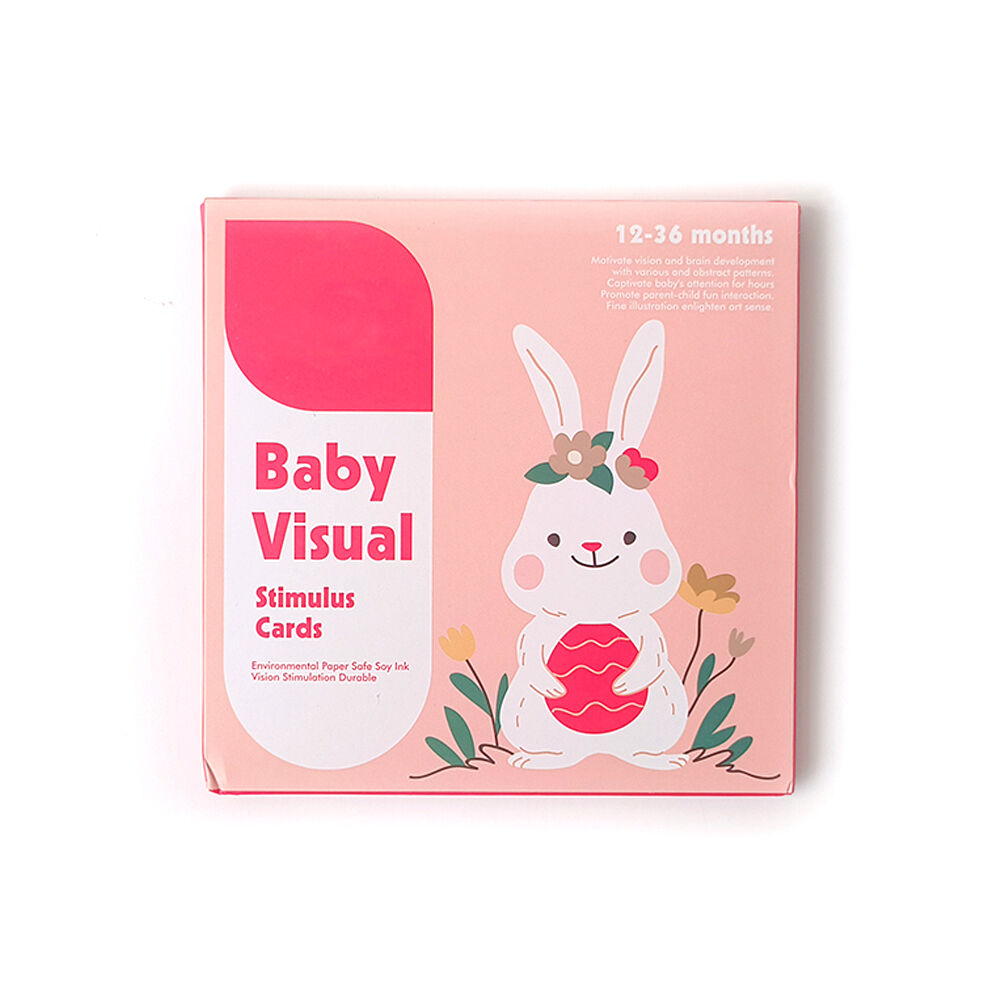
The vocabulary explosion period, typically occurring between 18 and 24 months of age, represents one of the most remarkable developmental milestones in early childhood. During this critical phase, children transition from acquiring words slowly to learning new vocabulary at an astonishing rate of up to ten words per day. Parents and educators seeking effective tools to support this natural learning surge are increasingly turning to cognitive cards as strategic educational resources. These specialized learning materials offer structured, visual, and interactive approaches that align perfectly with how young children naturally process and retain new language concepts during this pivotal developmental window.
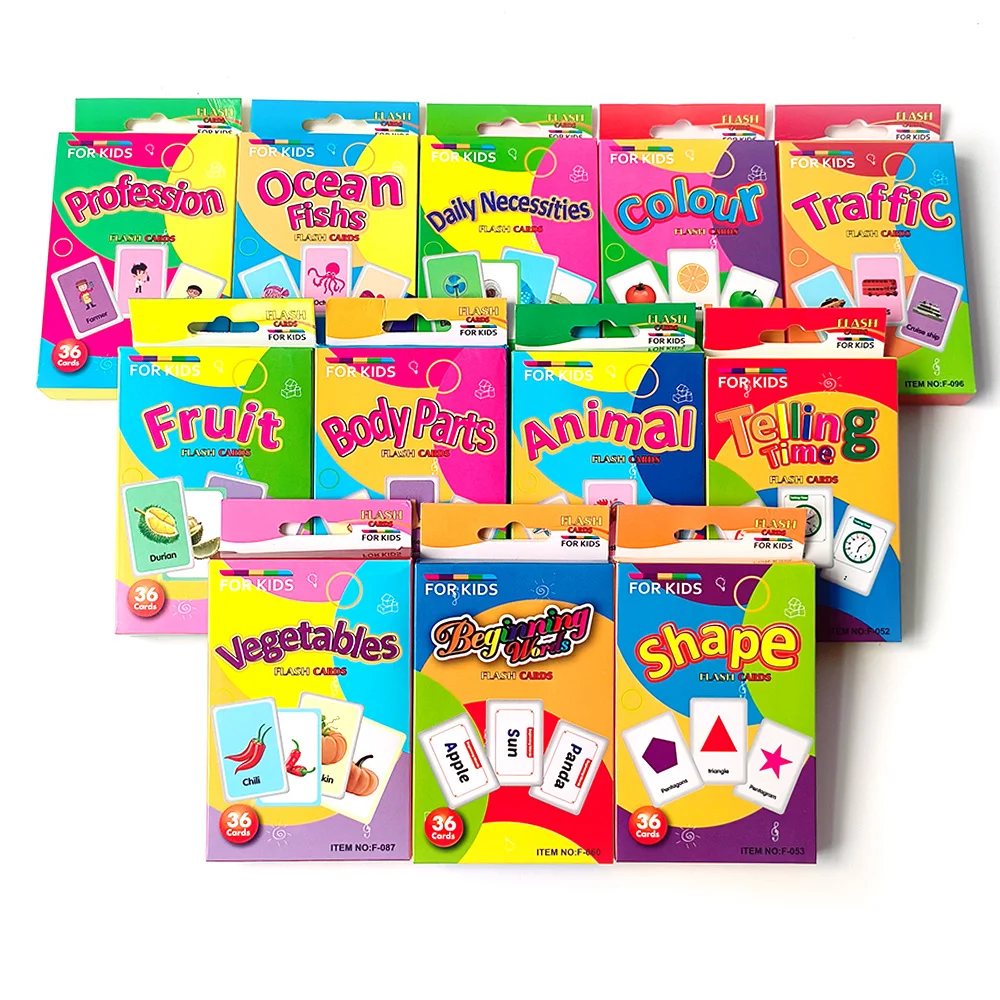
Understanding the specific role that cognitive cards play during the vocabulary explosion period requires examining both the neurological foundations of language acquisition and the practical mechanisms through which visual learning tools enhance word recognition, semantic understanding, and memory consolidation. Research in developmental psychology consistently demonstrates that multi-sensory learning experiences produce stronger neural pathways than single-modality exposure, making cognitive cards particularly valuable during this sensitive period when the brain exhibits heightened plasticity for language learning. This article explores the multifaceted contributions these educational tools make to vocabulary development, examining their impact on word recognition speed, conceptual categorization, semantic network formation, and long-term retention capabilities in young learners.
Understanding the Vocabulary Explosion Period and Its Learning Demands
Neurological Foundations of Rapid Vocabulary Acquisition
The vocabulary explosion period coincides with significant neurological changes in the developing brain, particularly in areas associated with language processing such as Broca's area and Wernicke's area. During this phase, synaptic density in language-related cortical regions reaches peak levels, creating optimal conditions for establishing new neural connections between auditory input, visual representations, and conceptual understanding. Cognitive cards leverage this neurological readiness by providing consistent, repeated exposure to word-image pairings that help strengthen these emerging neural pathways. The visual cortex processes images significantly faster than text, allowing young children who have not yet developed reading skills to form immediate associations between spoken words and their visual referents.
The rapid pace of vocabulary acquisition during this period places specific demands on learning tools and methodologies. Children need multiple exposures to new words in varied contexts to move vocabulary from recognition to active production. Cognitive cards meet this requirement through their portable, repeatable nature, allowing caregivers to present the same vocabulary items across different settings and times throughout the day. This distributed practice approach aligns with spacing effect principles in memory research, which demonstrate that information encountered repeatedly over time becomes more deeply encoded than information learned in a single intensive session. The structured format of cognitive cards also reduces cognitive load by presenting one clear concept at a time, preventing the overwhelm that can occur when young learners encounter too much linguistic input simultaneously.
Characteristics of Optimal Learning Tools for This Developmental Stage
Effective educational tools for the vocabulary explosion period must align with the cognitive capabilities and attention characteristics typical of toddlers. Children at this developmental stage possess limited sustained attention spans, typically ranging from two to six minutes for focused activities, requiring learning materials that deliver clear, immediate information without excessive complexity. Cognitive cards excel in this regard by presenting single, unambiguous concepts with clear visual representations, allowing quick comprehension followed by natural transitions to other activities or cards. The tactile nature of physical cognitive cards also engages fine motor skills and provides sensory feedback that reinforces learning through multiple channels simultaneously.
The vocabulary explosion period is characterized by both breadth and depth in language learning, as children simultaneously expand the number of words they know while also developing richer semantic understanding of familiar terms. Quality cognitive cards support both dimensions by including varied examples within semantic categories and by depicting objects, actions, and concepts in contexts that reveal meaning beyond simple labeling. For instance, rather than showing isolated objects against blank backgrounds, well-designed cognitive cards may depict items in natural settings or use cases, helping children understand not just what something is called but also where it belongs, what it does, or how it relates to other known concepts. This contextual richness transforms vocabulary learning from mere memorization into genuine comprehension, laying foundations for sophisticated language use as children mature.
Primary Functions of Cognitive Cards in Vocabulary Development
Accelerating Word-Object Association Formation
One of the most fundamental roles that cognitive cards play during the vocabulary explosion period involves facilitating rapid, accurate associations between verbal labels and their corresponding referents. When a caregiver holds up a card depicting an apple while simultaneously saying the word 'apple,' the child receives synchronized auditory and visual input that activates multiple brain regions simultaneously. This multimodal presentation creates stronger memory traces than either auditory or visual input alone, significantly improving both the speed of initial learning and the durability of the memory over time. The repeatability of cognitive cards allows for the multiple exposures necessary to move words from short-term recognition to long-term retrieval capacity.
The visual clarity provided by cognitive cards eliminates ambiguity that often exists in real-world learning situations. When attempting to teach the word 'bird' while pointing at a tree containing multiple elements including leaves, branches, sky, and perhaps several birds, a young child may struggle to identify exactly which element the word references. Cognitive cards isolate the target concept, removing this referential ambiguity and allowing children to form precise associations. This clarity proves especially valuable for abstract concepts, emotions, or actions that cannot be easily pointed to in the immediate environment. As children move through the vocabulary explosion period, the cumulative effect of these clear, repeated associations builds a robust foundational vocabulary that supports further language development and early literacy skills.
Building Semantic Categories and Conceptual Frameworks
Beyond individual word learning, cognitive cards play a crucial role in helping children organize vocabulary into meaningful semantic categories. Sets of cognitive cards typically group related items together, such as animals, foods, vehicles, or household objects, allowing children to perceive relationships and commonalities among items within categories. This categorical organization mirrors how the brain naturally structures semantic knowledge, with related concepts stored in interconnected networks rather than as isolated units. When children work with cognitive cards organized by themes, they develop not just vocabulary but also the conceptual frameworks that support higher-order thinking skills like comparison, classification, and analogical reasoning.
The process of sorting and categorizing cognitive cards provides active learning opportunities that extend beyond passive reception of information. When a child groups animal cards together or separates food items from toys, they engage in hands-on cognitive processing that deepens understanding of category boundaries and shared attributes. These classification activities during the vocabulary explosion period establish mental structures that facilitate more efficient learning as vocabulary continues to expand. Children who develop strong categorical frameworks can more easily integrate new vocabulary by slotting unfamiliar words into existing semantic networks, a process known as fast mapping that becomes increasingly important as the pace of vocabulary acquisition accelerates throughout early childhood.
Enhancing Memory Consolidation Through Visual Association
The visual nature of cognitive cards provides powerful mnemonic support during the vocabulary explosion period by creating memorable mental images that anchor verbal labels in long-term memory. Research in cognitive psychology demonstrates that concrete, imageable words are learned and retained more easily than abstract terms, a phenomenon known as the picture superiority effect. Cognitive cards capitalize on this effect by pairing every vocabulary item with a clear visual representation, transforming even relatively abstract concepts into concrete images that children can mentally reference when retrieving words from memory. This visual anchoring proves especially valuable during the vocabulary explosion period when the sheer volume of new words being acquired could otherwise overwhelm developing memory systems.
The consistent visual format of cognitive cards also supports pattern recognition and predictive processing skills that enhance learning efficiency. As children become familiar with the card format and routine, they develop expectations about the learning experience that reduce cognitive load and allow more mental resources to focus specifically on the vocabulary content. This procedural familiarity creates a comfortable learning framework within which new information can be processed more efficiently. Additionally, the physical act of handling cognitive cards engages procedural memory systems in addition to declarative memory, creating multiple memory traces for each vocabulary item and increasing the likelihood of successful retrieval when the word is needed in spontaneous communication contexts outside of structured learning sessions.
Cognitive Cards as Tools for Interactive Language Engagement
Facilitating Adult-Child Language Interaction Patterns
Cognitive cards serve as valuable conversation catalysts that structure productive language interaction between children and caregivers during the vocabulary explosion period. The cards provide natural focal points for joint attention, a critical precursor to language learning in which adult and child focus simultaneously on the same object or concept. This shared focus creates optimal conditions for vocabulary instruction, as the child's attention is already directed toward the referent when the adult provides the verbal label. The turn-taking structure naturally supported by card-based activities also mirrors conversational patterns, helping children develop pragmatic language skills alongside vocabulary expansion.
Quality language interaction during the vocabulary explosion period extends beyond simple labeling to include descriptive language, questions, and contextual information that enriches children's understanding of new vocabulary. Cognitive cards provide scaffolding for these elaborated interactions by prompting caregivers to extend beyond basic naming toward more complex language use. For example, a card depicting a dog might prompt discussions about colors, sizes, sounds, actions, or personal experiences with dogs, exposing children to vocabulary and grammatical structures that support comprehensive language development. The structured yet flexible nature of cognitive cards allows caregivers with varying levels of educational background to engage in these enriching language interactions, democratizing access to high-quality language input during this critical developmental period.
Supporting Self-Directed Exploration and Independent Learning
While guided instruction with cognitive cards provides valuable structured learning, these materials also support independent exploration that allows children to exercise agency in their vocabulary development. During the vocabulary explosion period, children exhibit intense curiosity about language and actively seek opportunities to practice and extend their emerging skills. Cognitive cards placed within a child's reach enable self-initiated learning sessions where children can browse through cards at their own pace, selecting items of personal interest and rehearsing vocabulary without adult mediation. This autonomous engagement supports intrinsic motivation and helps children develop self-regulatory learning behaviors that serve them throughout their educational journey.
The self-paced nature of independent cognitive card exploration allows children to allocate attention according to their individual learning needs and preferences. A child may spend extended time examining cards depicting unfamiliar concepts while quickly moving past well-mastered vocabulary, naturally implementing a form of personalized learning that adapts to their current knowledge state. This individualization proves difficult to achieve in group settings or through digital media that progresses at predetermined rates. The physical format of cognitive cards also supports repetition without the fatigue or overstimulation that can occur with electronic devices, allowing children to return to favorite cards repeatedly as they consolidate understanding and build confidence with new vocabulary during this period of rapid linguistic growth.
Optimizing Cognitive Card Implementation During Vocabulary Explosion
Strategic Selection and Sequencing of Vocabulary Content
The effectiveness of cognitive cards during the vocabulary explosion period depends significantly on thoughtful selection of vocabulary content that aligns with children's developmental readiness and experiential backgrounds. Research indicates that children learn words more readily when they reference concepts already familiar from daily experience, suggesting that cognitive cards should prioritize depicting common objects, people, actions, and experiences from children's immediate environments. Starting with highly familiar referents allows children to focus cognitive resources on the word-object association rather than simultaneously grappling with both unfamiliar concepts and unfamiliar labels. As mastery develops, cognitive cards can gradually introduce less familiar vocabulary that extends children's conceptual and linguistic boundaries.
Sequencing cognitive card introduction based on semantic relatedness and conceptual complexity optimizes learning by building coherent knowledge structures rather than presenting random, disconnected vocabulary items. Introducing several cards within a single semantic category in close temporal proximity allows children to perceive relationships and develop category-level understanding alongside individual word knowledge. However, some variation across categories maintains engagement and prevents the monotony that can result from extended focus on a single theme. Balancing thematic coherence with strategic variety creates learning experiences that are both educationally efficient and appropriately stimulating for young learners navigating the vocabulary explosion period. The physical organization of cognitive cards into themed sets supports this balanced approach by allowing caregivers to alternate between focused category exploration and broader vocabulary review sessions.
Integrating Cognitive Cards with Natural Language Contexts
While cognitive cards provide valuable structured learning opportunities, their impact during the vocabulary explosion period is maximized when card-based learning connects explicitly to natural language use in daily contexts. After introducing vocabulary through cognitive cards, caregivers should create opportunities for children to encounter and use these words in functional communication situations throughout the day. For example, after working with food-related cognitive cards during a learning session, caregivers might reference these same vocabulary items during meal preparation, grocery shopping, or snack time, helping children recognize that the words learned with cards apply to real objects and situations in their environment.
This integration between card-based learning and contextual application supports the transfer of vocabulary from recognition to production, moving words from passive understanding to active use in spontaneous communication. Cognitive cards serve as initial teaching tools that establish clear, unambiguous associations, while real-world application provides the varied exemplars and functional practice necessary for flexible, generalized word use. The vocabulary explosion period is characterized not just by quantitative growth in words known but also by qualitative improvements in how flexibly and appropriately children deploy their expanding vocabulary. By strategically connecting cognitive card activities to meaningful contexts, caregivers help children develop vocabulary that is not merely memorized but genuinely understood and functionally accessible across diverse communication situations.
Monitoring Progress and Adapting Card Use to Individual Development
Individual variation in the timing, pace, and style of vocabulary development during the explosion period necessitates responsive use of cognitive cards that adapts to each child's unique learning trajectory. Some children demonstrate rapid acquisition with minimal repetition, while others benefit from more extensive practice before achieving mastery. Caregivers using cognitive cards should observe children's responses carefully, noting which vocabulary items are quickly mastered, which require additional exposure, and which may be developmentally inappropriate or uninteresting to the individual child. This observational approach allows for customization of card selection, presentation frequency, and instructional strategies to match the child's current zone of proximal development.
Regular but informal assessment of vocabulary growth helps caregivers gauge whether cognitive card use is supporting development effectively or whether adjustments are needed. Simple activities like asking children to point to named cards, verbally label depicted items, or sort cards into categories provide insight into current vocabulary knowledge without creating stressful testing situations. When progress plateaus or interest wanes, modifications such as introducing new card sets, changing presentation formats, or temporarily reducing card-based activities in favor of other language-rich experiences can reignite engagement and learning momentum. The vocabulary explosion period, while characterized by general patterns, manifests uniquely in each child, and effective use of cognitive cards requires flexibility and responsiveness to individual developmental signals rather than rigid adherence to predetermined schedules or sequences.
FAQ
At what age should parents begin using cognitive cards with their children?
Parents can introduce cognitive cards as early as 12 to 15 months when children begin showing interest in pictures and demonstrate emerging receptive language skills. However, the vocabulary explosion period typically begins around 18 months, making this an optimal time to increase cognitive card use systematically. The key indicator for readiness is not strictly age-based but rather the child's ability to attend to pictures with interest and their demonstration of understanding that images represent real objects. Starting with simple, high-contrast images of familiar objects allows even younger children to benefit from cognitive cards, with complexity and variety increasing as the child's attention span and vocabulary foundation develop throughout the toddler years.
How many new cognitive cards should be introduced at one time during the vocabulary explosion period?
Research on cognitive load and memory capacity in young children suggests introducing two to four new cognitive cards per session during the vocabulary explosion period, ensuring adequate repetition and consolidation before adding additional vocabulary. This measured approach prevents overwhelming the child while still providing sufficient novelty to maintain engagement. Once children demonstrate consistent recognition and can verbally label new vocabulary items, these cards can be incorporated into review sets while new items are introduced. The specific number should be adjusted based on individual children's responses, with some children thriving with more rapid introduction and others benefiting from more gradual, extensively repeated exposure. Quality of learning always takes precedence over quantity, and secure mastery of fewer words provides a stronger foundation than superficial exposure to many words.
Can digital versions of cognitive cards be as effective as physical cards during vocabulary development?
While digital cognitive cards can provide vocabulary learning support, physical cards offer distinct advantages during the vocabulary explosion period that make them preferable for many learning contexts. Physical cards provide tactile feedback, support fine motor development through handling, and eliminate screen time concerns relevant to this young age group. The tangible nature of physical cards also facilitates joint attention between caregiver and child without the distractions often present in digital environments. However, digital versions can serve as supplements, particularly for travel or situations where carrying physical card sets is impractical. Research suggests that learning outcomes are optimized when digital tools complement rather than replace hands-on, interpersonal learning experiences during early childhood, making physical cognitive cards the primary recommendation with digital versions serving targeted supplementary functions.
How long should cognitive card sessions last for optimal learning during the vocabulary explosion period?
Optimal session length for cognitive card activities during the vocabulary explosion period typically ranges from five to ten minutes, aligning with toddlers' limited sustained attention capacities. Rather than extended single sessions, multiple brief interactions throughout the day provide better learning outcomes by implementing distributed practice principles and maintaining child engagement. Sessions should end before the child shows signs of frustration or disinterest, preserving positive associations with the learning activity. Flexibility is essential, as some children may engage productively for longer periods while others benefit from even shorter, more frequent interactions. The goal is to create positive, pressure-free learning experiences that children anticipate with enthusiasm rather than viewing as tedious obligations. As children mature beyond the vocabulary explosion period into preschool years, attention spans naturally extend, allowing for gradually longer sessions with cognitive cards and other structured learning materials.
Table of Contents
- Understanding the Vocabulary Explosion Period and Its Learning Demands
- Primary Functions of Cognitive Cards in Vocabulary Development
- Cognitive Cards as Tools for Interactive Language Engagement
- Optimizing Cognitive Card Implementation During Vocabulary Explosion
-
FAQ
- At what age should parents begin using cognitive cards with their children?
- How many new cognitive cards should be introduced at one time during the vocabulary explosion period?
- Can digital versions of cognitive cards be as effective as physical cards during vocabulary development?
- How long should cognitive card sessions last for optimal learning during the vocabulary explosion period?