 EN
EN


Building a comprehensive knowledge system through cognitive cards requires a methodical approach that combines educational psychology, curriculum design principles, and systematic categorization strategies. Cognitive cards serve as powerful learning tools that help children absorb, organize, and retain information effectively when designed with intentional structure and pedagogical foundations. The scientific categorization and sequential design of cognitive cards transform simple flashcards into a dynamic educational framework that supports progressive learning, reinforces memory retention, and builds interconnected knowledge networks that grow with the learner.
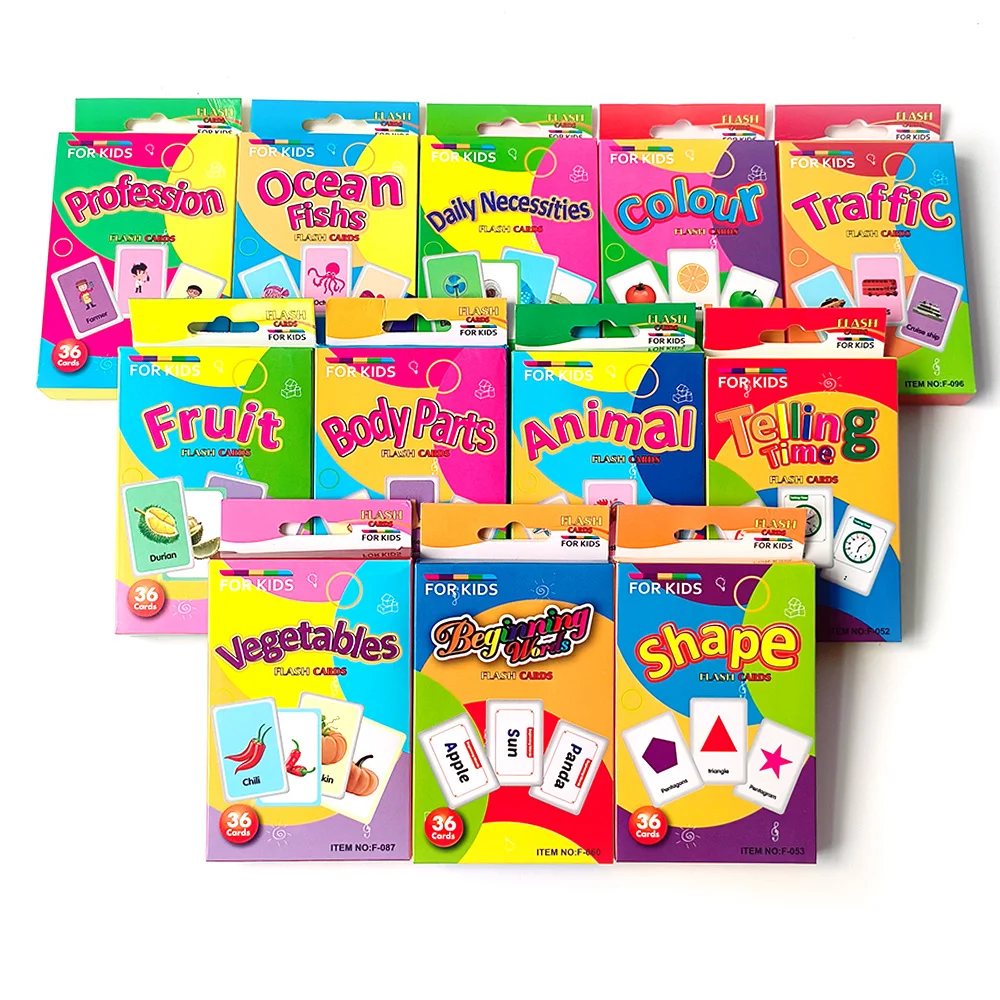
Understanding how to systematically categorize and sequence cognitive cards enables educators and parents to create learning materials that align with child development stages, cognitive load principles, and knowledge scaffolding theories. This comprehensive approach ensures that each card builds upon previously learned concepts while introducing new information at appropriate difficulty levels, creating a cohesive educational journey that respects the natural learning progression of young minds. By implementing research-based categorization methods and intentional sequencing strategies, cognitive cards become more than isolated facts—they evolve into building blocks of a structured knowledge system that promotes deep understanding and long-term retention.
Foundational Principles of Cognitive Card Categorization
Understanding Developmental Stage Alignment
The scientific categorization of cognitive cards begins with a thorough understanding of child development stages and cognitive capabilities at different ages. Cognitive cards must be grouped according to age-appropriate concepts that match children's neurological readiness and processing abilities. For toddlers and preschoolers, categorization should focus on concrete, observable concepts such as colors, shapes, animals, and everyday objects that connect directly to their sensory experiences. As children mature, cognitive cards can introduce more abstract categories including emotions, relationships, temporal concepts, and cause-effect patterns that require higher-order thinking skills.
Effective categorization respects the zone of proximal development, ensuring that each category presents material that is challenging yet achievable with appropriate support. Research in educational psychology demonstrates that children learn most effectively when new information connects to existing knowledge schemas, making it essential to organize cognitive cards in categories that build upon familiar concepts before introducing novel ideas. This developmental alignment prevents cognitive overload while maintaining engagement through appropriately challenging content that stimulates curiosity without causing frustration or disengagement.
Establishing Logical Taxonomy Systems
Creating a robust taxonomy system for cognitive cards involves establishing clear hierarchical relationships between broad categories and specific subcategories. The primary categorization level should divide cognitive cards into major knowledge domains such as language development, mathematical concepts, natural sciences, social understanding, and sensory exploration. Within each major domain, secondary categories provide more specific groupings—for example, the language development domain might subdivide into vocabulary building, phonetic awareness, sentence structure, and storytelling elements. This hierarchical structure creates a logical framework that guides both the creation and implementation of cognitive cards within a coherent knowledge system.
The taxonomy system should incorporate cross-referencing capabilities that acknowledge the interconnected nature of knowledge. Many concepts span multiple categories, and effective cognitive card systems recognize these connections through deliberate design choices. For instance, cards teaching fruit names simultaneously support vocabulary development, color recognition, and nutritional awareness. By designing cognitive cards with explicit category markers and intentional cross-category connections, educators create learning materials that reinforce the integrated nature of knowledge rather than presenting information in isolated silos that fail to reflect real-world complexity.
Implementing Theme-Based Clustering
Theme-based clustering represents another powerful categorization approach that organizes cognitive cards around cohesive topics or real-world scenarios. Rather than grouping cards purely by abstract educational objectives, thematic organization creates meaningful contexts that enhance memory retention and practical application. Themes such as farm animals, ocean life, community helpers, seasons, or daily routines provide natural frameworks within which individual cognitive cards contribute to a comprehensive understanding of a unified topic. This contextual learning approach aligns with constructivist educational theories that emphasize the importance of situated cognition and meaningful learning experiences.
When implementing theme-based clustering for cognitive cards, designers should ensure that each theme contains sufficient breadth and depth to support extended exploration while maintaining focus and coherence. A well-designed thematic set might include 15 to 30 cognitive cards that explore various aspects of a central topic, incorporating visual representations, vocabulary terms, related actions, associated concepts, and extension activities. This comprehensive thematic approach transforms cognitive cards from isolated learning prompts into components of an immersive educational experience that encourages children to develop deep, multifaceted understanding of important topics rather than superficial familiarity with disconnected facts.
Sequential Design Strategies for Progressive Learning
Applying Scaffolding Principles to Card Sequences
The sequential design of cognitive cards must incorporate scaffolding principles that gradually increase complexity while providing appropriate support at each learning stage. Initial cards in any sequence should present foundational concepts using simple, clear imagery and minimal text, establishing baseline understanding before introducing variations, exceptions, or related concepts. As learners progress through the sequence, cognitive cards systematically introduce additional elements, such as more complex vocabulary, comparative concepts, or application scenarios that require higher-order thinking skills. This progressive complexity ensures that learners build competence and confidence before facing more challenging material.
Effective scaffolding in cognitive card sequences also involves strategic repetition and reinforcement patterns that support memory consolidation without causing boredom. Cards should reintroduce previously learned concepts in new contexts or with slight variations that require learners to recognize familiar patterns while adapting to novel presentations. This spiral curriculum approach, where concepts reappear at increasingly sophisticated levels throughout the learning sequence, reinforces long-term retention and demonstrates the applicability of learned concepts across various situations. The sequential design should explicitly plan these reinforcement moments, ensuring that foundational concepts receive adequate repetition before the sequence advances to dependent concepts.
Structuring Prerequisite Concept Pathways
Successful sequential design of cognitive cards requires careful mapping of prerequisite relationships between concepts, ensuring that learners encounter foundational ideas before being introduced to dependent concepts. This prerequisite pathway planning involves analyzing the logical dependencies within a knowledge domain and organizing cognitive cards in sequences that respect these relationships. For example, in mathematical concept development, cognitive cards introducing quantity recognition must precede cards teaching counting sequences, which in turn must come before cards exploring addition concepts. Violating these prerequisite relationships creates confusion and undermines learning effectiveness.
Creating explicit prerequisite concept pathways for cognitive cards involves developing visual maps or flowcharts that illustrate how concepts build upon one another within the knowledge system. These pathways guide educators in presenting cards in appropriate sequences while also revealing opportunities for differentiated instruction that accommodates learners with varying background knowledge. Some children may need extended work with prerequisite cognitive cards before advancing, while others may quickly master foundational concepts and benefit from accelerated progression through the sequence. The prerequisite mapping enables flexible, responsive instruction that maintains the integrity of logical concept progression while adapting to individual learning needs and paces.
Designing Difficulty Progression Curves
The sequential arrangement of cognitive cards should follow intentional difficulty progression curves that maintain optimal challenge levels throughout the learning journey. Rather than implementing linear difficulty increases that may become too steep or too gradual, effective sequences incorporate variable progression rates that account for concept density, cognitive load, and natural learning plateaus. Initial cards in a sequence might progress rapidly through basic concepts that children grasp quickly, then slow progression when introducing more complex ideas that require extended processing time and multiple exposures before mastery occurs.
Designing appropriate difficulty curves for cognitive card sequences involves analyzing multiple dimensions of complexity including visual complexity, vocabulary sophistication, conceptual abstraction, and required background knowledge. Cards that introduce simple concrete nouns with clear photographic images represent lower difficulty levels, while cards presenting abstract concepts, requiring inference, or depicting ambiguous scenarios represent higher difficulty levels. The progression curve should gradually increase along these multiple dimensions rather than overwhelming learners with simultaneous jumps in visual complexity, vocabulary difficulty, and conceptual abstraction. This multidimensional approach to difficulty progression creates smooth learning trajectories that support steady skill development and sustained motivation.
Integrating Educational Frameworks into Card Design
Incorporating Multiple Intelligence Theory
Scientific categorization and sequencing of cognitive cards benefits significantly from incorporating multiple intelligence theory, which recognizes that children learn through diverse cognitive pathways including linguistic, logical-mathematical, spatial, bodily-kinesthetic, musical, interpersonal, intrapersonal, and naturalistic intelligences. Cognitive card categories should intentionally address multiple intelligence domains rather than focusing exclusively on linguistic or logical-mathematical learning. For example, a comprehensive cognitive card system might include categories specifically designed to develop spatial reasoning through pattern recognition cards, musical intelligence through rhythm and sound association cards, or bodily-kinesthetic learning through action verb cards that encourage physical response.
The sequential design of cognitive cards should also vary the primary intelligence domains engaged across the learning progression, creating a diverse educational experience that prevents fatigue and leverages children's natural learning preferences. A well-designed sequence might alternate between cards emphasizing visual-spatial processing, linguistic development, and logical reasoning, ensuring that the learning experience engages multiple neural pathways and accommodates diverse learning styles. This intelligence-diverse approach not only makes learning more engaging for all children but also strengthens neural connections across brain regions, supporting the development of flexible thinking and cross-domain problem-solving abilities.
Applying Bloom's Taxonomy to Cognitive Objectives
The hierarchical structure of Bloom's Taxonomy provides a valuable framework for sequencing cognitive cards according to cognitive complexity levels, progressing from lower-order thinking skills toward higher-order thinking skills. Initial cognitive cards in any sequence should target knowledge and comprehension levels, helping children identify, recognize, and describe basic concepts. Subsequent cards in the sequence should progress toward application level objectives, encouraging children to use learned concepts in new contexts or demonstrate understanding through categorization and comparison tasks. Advanced cards within the sequence should target analysis, evaluation, and creation levels, challenging children to identify patterns, make judgments, or combine concepts in novel ways.
Implementing Bloom's Taxonomy in cognitive card sequences requires explicit design of prompts, activities, and assessment questions that correspond to each cognitive level. Lower-level cognitive cards might simply ask children to name objects or match identical images, while higher-level cards might present scenarios requiring children to predict outcomes, explain cause-effect relationships, or generate alternative solutions. This taxonomic progression ensures that cognitive cards systematically develop increasingly sophisticated thinking skills rather than remaining at recall and recognition levels throughout the learning experience. The sequential application of Bloom's Taxonomy transforms cognitive cards from passive information delivery tools into active thinking development instruments.
Implementing Montessori Isolation of Difficulty Principle
The Montessori principle of isolation of difficulty offers crucial guidance for designing cognitive card sequences that maximize learning effectiveness by controlling the number of new variables introduced simultaneously. According to this principle, each cognitive card or small set of cards should focus on a single new learning element while keeping other variables constant and familiar. For instance, when teaching color concepts, early cognitive cards should present identical shapes in different colors, isolating color as the variable of focus. Once children master color recognition, subsequent cards can introduce shape variations while maintaining consistent colors, thereby isolating shape as the new learning focus.
Applying the isolation of difficulty principle to cognitive card sequences requires systematic analysis of the multiple dimensions present in each card, including visual elements, vocabulary terms, conceptual categories, and contextual settings. Sequential design should deliberately manipulate only one dimension at a time, allowing children to build mastery incrementally without the confusion that arises from simultaneous multi-dimensional changes. This controlled progression approach is particularly important when designing cognitive cards for younger children or when introducing complex concepts that contain numerous component skills. By isolating difficulties and introducing complexity gradually, cognitive card sequences support thorough understanding and reduce the cognitive overload that impedes effective learning and retention.
Creating Knowledge System Architecture
Establishing Cross-Category Connection Points
Building a true knowledge system through cognitive cards requires establishing deliberate connection points between different categories that demonstrate how concepts relate across domains. Rather than treating each category as an isolated learning module, effective knowledge systems design explicit bridges that help children recognize patterns, relationships, and applications that span multiple categories. For example, cognitive cards teaching animal names might connect to cards exploring habitats, which in turn connect to geography cards and ecosystem concept cards. These cross-category connections transform isolated fact collections into integrated knowledge networks that reflect the interconnected nature of real-world understanding.
Designing connection points between cognitive card categories involves creating transitional card sets that explicitly highlight relationships between domains. These bridge cards might present comparison activities, categorization challenges, or application scenarios that require integrating concepts from multiple categories. For instance, a connection card might show various animals and ask children to group them by habitat type, thereby activating knowledge from both animal recognition and environmental concept categories. The sequential placement of these connection cards should occur after children develop foundational competence in the individual categories being linked, ensuring that integration builds upon solid understanding rather than creating confusion through premature complexity.
Designing Cumulative Review Mechanisms
Effective knowledge system construction through cognitive cards must incorporate systematic cumulative review mechanisms that reinforce previously learned concepts while introducing new material. Rather than abandoning completed categories once children advance to new topics, well-designed cognitive card systems include regular review cycles that revisit earlier content at strategic intervals determined by spacing effect research and forgetting curve principles. These review mechanisms might involve periodic reintroduction of cognitive cards from earlier categories, integration of foundational concepts into new learning contexts, or assessment cards that check retention of prerequisite knowledge before introducing dependent concepts.
The design of cumulative review mechanisms should follow evidence-based spacing schedules that optimize long-term retention, with initial reviews occurring shortly after learning, followed by progressively longer intervals as concepts move into long-term memory. Cognitive card sequences should explicitly schedule these review points, perhaps dedicating every fifth or tenth card position to review material from earlier in the sequence or from related categories. This systematic approach to review transforms cognitive cards from one-time learning prompts into components of a spaced repetition system that maximizes retention efficiency. The cumulative nature of these reviews also helps children recognize their growing competence, building confidence and motivation as they successfully recall concepts learned weeks or months earlier.
Building Assessment and Mastery Tracking Systems
A comprehensive knowledge system built through cognitive cards requires integrated assessment mechanisms that track mastery levels and guide instructional decisions. The sequential design should incorporate assessment cards at regular intervals that evaluate whether children have achieved the learning objectives of preceding card sets before advancing to more complex material. These assessment points might involve recognition tasks, recall challenges, application activities, or creative synthesis prompts that reveal depth of understanding. The results of these assessments inform whether children should advance to new categories, require additional practice with current concepts, or benefit from remediation of foundational skills.
Creating effective mastery tracking systems for cognitive cards involves establishing clear performance criteria that define successful learning at each stage of the knowledge system. Rather than binary pass-fail assessments, effective systems recognize multiple mastery levels such as emerging recognition, consistent identification, independent recall, and creative application. Cognitive cards designed for assessment purposes should explicitly target these different mastery levels, providing nuanced information about children's learning progress. The tracking system should also maintain records over time, revealing learning trajectories, identifying persistent challenge areas, and documenting growth patterns that inform both immediate instructional adjustments and long-term curriculum planning for individual learners or groups.
FAQ
What is the optimal number of cognitive cards in a single category before moving to a new topic?
The optimal number of cognitive cards per category depends on the complexity of the concepts being taught and the age of the learners, but research suggests that 12 to 24 cards per thematic category provides sufficient depth without overwhelming young learners. For very young children or highly complex concepts, smaller sets of 8 to 12 cards allow thorough mastery before progression, while older children with stronger working memory can handle larger sets of 20 to 30 cards. The key consideration is ensuring that each category contains enough cards to establish robust understanding and allow for meaningful pattern recognition while avoiding the cognitive fatigue that comes from excessively large sets that take too long to complete.
How frequently should cognitive cards from earlier categories be reviewed to maintain knowledge retention?
Effective knowledge retention through cognitive cards requires implementing spaced repetition schedules that follow evidence-based timing intervals. The initial review should occur within 24 hours of first learning, followed by reviews at approximately 3 days, 1 week, 2 weeks, 1 month, and 3 month intervals. These expanding intervals align with the spacing effect research demonstrating that progressively longer gaps between review sessions optimize long-term memory consolidation. In practical implementation, educators should incorporate cards from earlier categories into ongoing learning sessions according to these schedules, perhaps dedicating the first few minutes of each learning session to reviewing previously mastered cognitive cards from earlier stages of the knowledge system.
Can cognitive cards effectively teach abstract concepts or are they limited to concrete objects and simple vocabulary?
Cognitive cards can effectively teach abstract concepts when designed with appropriate developmental considerations and visual strategies that make intangible ideas more concrete. Abstract concepts such as emotions, time, quantity relationships, or cause-effect patterns can be represented through carefully chosen imagery, symbolic representations, sequential illustrations, or scenario depictions that give visual form to abstract ideas. The key to success lies in the sequential design—abstract concept cards should appear later in learning progressions after children have developed strong concrete concept foundations, and they should use visual metaphors, facial expressions, situational contexts, or symbolic systems that bridge from concrete experience to abstract understanding. Multiple cards exploring different aspects or examples of the same abstract concept help children build robust mental models that transcend specific instances.
How should cognitive card categories be organized for children with different learning paces or special educational needs?
Organizing cognitive card categories for diverse learners requires implementing flexible, modular systems that allow individualized progression paths while maintaining the integrity of prerequisite relationships and logical sequencing. The categorization structure should clearly identify core essential categories that all learners must complete versus extension categories that provide enrichment for advanced learners. Within each category, cards can be further divided into mastery levels—basic, intermediate, and advanced—allowing educators to adjust the depth of exploration based on individual needs. For children requiring additional support, the system should include more granular subcategories with smaller conceptual steps between cards and more extensive repetition opportunities. The sequential design should explicitly mark optional entry points and exit points within categories, enabling educators to customize learning paths that respect individual differences while ensuring that all children build coherent knowledge systems appropriate to their developmental levels and learning profiles.
Table of Contents
- Foundational Principles of Cognitive Card Categorization
- Sequential Design Strategies for Progressive Learning
- Integrating Educational Frameworks into Card Design
- Creating Knowledge System Architecture
-
FAQ
- What is the optimal number of cognitive cards in a single category before moving to a new topic?
- How frequently should cognitive cards from earlier categories be reviewed to maintain knowledge retention?
- Can cognitive cards effectively teach abstract concepts or are they limited to concrete objects and simple vocabulary?
- How should cognitive card categories be organized for children with different learning paces or special educational needs?